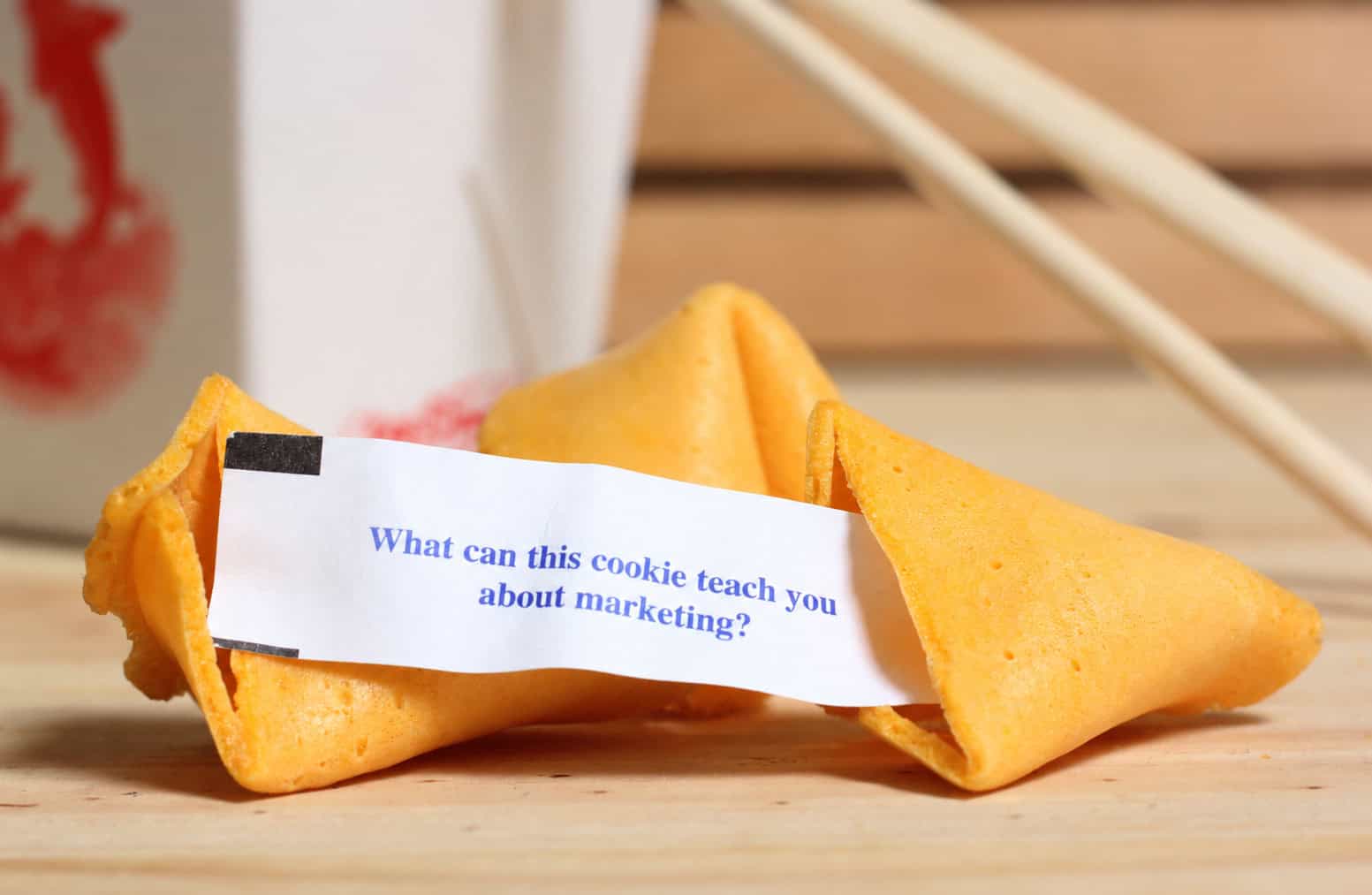
Few messages get the kind of attention we give a fortune cookie. It’s strange, but true. These random, vague, ultimately inconsequential predictions on tiny slips of paper somehow have the power to stop all other conversations and become the focus of an entire table of people. We share them, compare them, and–admit it–sometimes tuck them into purses and wallets.
For marketers struggling to get a simple email opened, it’s something worth thinking about: What makes that tiny scrap of paper so irresistible?
OpenFortune built a business around that question, putting ads into fortune cookies. They turned this after-dinner ritual into a marketing opportunity. It’s a novel idea that can inform how marketers approach communicating through print, merch, and other media.
The Powerful Pull of a Hidden Message
By March 2026, OpenFortune reported distributing up to 135 million sponsored cookies monthly through 47,000 restaurants, attracting brands including Capital One, Duolingo, and Hulu.
So what’s the appeal of this approach? For starters, it puts a message inside an experience people already enjoy. There’s the anticipation of opening the cookie, the curiosity about what the fortune will say, and the fun of sharing it with everyone at the table. The advertising becomes part of a moment people willingly participate in.
It’s the kind of creative tactic that has intrigued the most innovative marketers. MrBeast took advantage of it for promoting the second season of his Beast Games. The campaign included 2.5 million customized cookies, with 24,000 rare, numbered collectible slips mixed in. MrBeast helped create the fortunes, giving fans something to discover, compare, and collect. For a competition show, the element of chance made the delivery feel especially appropriate.
The timing made sense, too: A cookie arriving with takeout could introduce the show just before someone decided what to watch after dinner.
That’s the broader lesson: A message becomes more compelling when its delivery fits what people are doing, feeling, or deciding. You don’t need a fortune cookie to put that idea to work.
Print: Give Someone a Reason to Unfold It
A fortune cookie creates a question before revealing an answer: What’s inside?
Print can invite that same small act of discovery. A folded mailer might open with a question customers recognize, then reveal an unexpected answer. A printed event invitation might include a clue, a choice, or a preview of something guests will experience.
The reveal has to reward the effort. An intriguing cover that opens to generic sales copy will disappoint.
Print can also become more relevant through its placement. Imagine a planning checklist delivered when customers begin budgeting, or a concise comparison guide handed over just before they choose between services.
Before deciding on the format, ask: What would make someone want to pick this up—and why would they want it at this particular moment?
Merchandise: Give the Object a Role in an Experience
The cookie is part of something people are already doing together. That offers a different starting point for promotional merchandise.
Instead of beginning with a product catalog, begin with an occasion. A new employee’s first morning. A team completing a difficult project. A customer attending a workshop. A conference participant heading into a day of sessions.
What could make that moment more enjoyable, useful, or memorable?
A notebook could arrive with a thoughtful prompt tied to the workshop. A welcome kit could include a personal note from a future teammate. An event could let attendees choose a design that reflects their interests, giving them an easy conversation starter.
In each case, the product has a purpose within the experience. That gives the recipient a reason to engage with it beyond noticing the logo.
Video: Earn the Next Few Seconds
Video creators face a similar challenge: Give viewers a reason to discover what comes next.
A customer story could begin with the difficult decision someone faced. A product demonstration could start with a surprising result, then show how it happened. A company video could open on an intriguing detail of the work before revealing the larger story.
Curiosity creates an opening. The video then needs to deliver something worth watching.
Where viewers encounter it matters just as much. A video playing silently at a crowded trade show needs to communicate differently from one sent to a customer who has requested a demonstration. The setting should shape the length, opening, captions, and next steps.
Look for the Moment before Choosing the Medium
OpenFortune’s story invites marketers to pay closer attention to everyday behavior. When do customers pause? What do they enjoy opening, choosing, comparing, or sharing? When are they most likely to be open to a communication?
Those observations can lead to better decisions across print, merchandise, and video. For your next project, try writing down the moment of delivery before writing the headline or choosing the product. Describe where the person will be, what they’ll be doing, and what would make your message welcome.
Then build for that moment.
At L&R, we help bring those ideas to life through print, branded merchandise, design, and video—with the delivery experience considered from the start.