

Marketing Tools Advance. Communication Trends Come and Go. But Print Never Goes Out of Style.
The rumors, that print is dying, have been circulating—and repeatedly disproven—almost since Gutenberg first put ink to paper. And yet . . . the presses have definitely not stopped.
Radio was going to kill it. Then television. Then the internet. Email, we were told, would finish off direct mail. E-commerce would eliminate catalogs. Smartphones would make brochures unnecessary. Everyone who was anyone was “going paperless.”
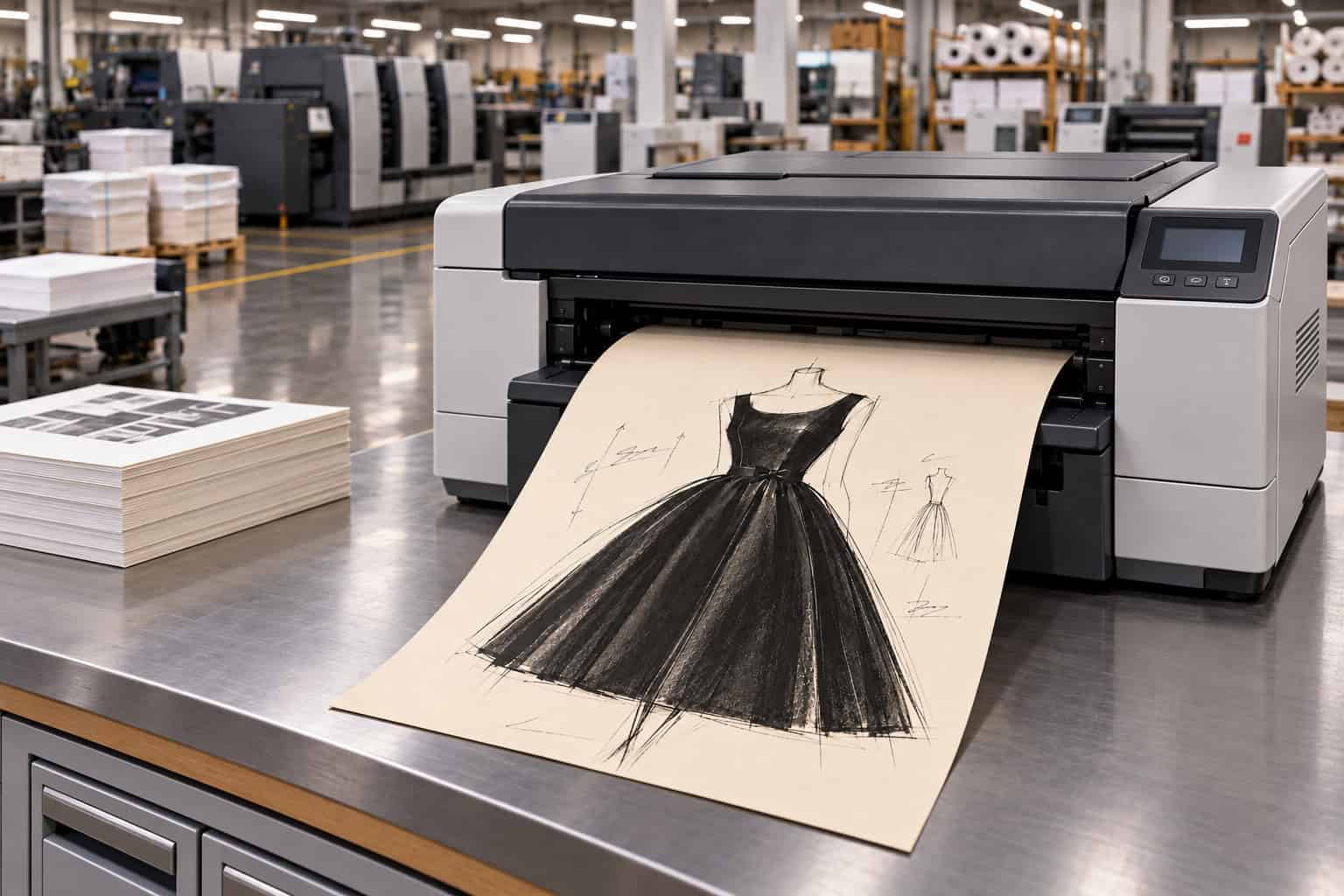
But guess what? Print is still here. It’s the little black dress of marketing. Classy, clean, timeless.
Why? What keeps a centuries-old medium relevant when almost any message can be delivered instantly to a screen?
The answer is not simply tradition or nostalgia. It’s print’s unusual ability to adapt without losing the qualities that made it valuable in the first place. And as artificial intelligence becomes ubiquitous, with more digital content than ever, those qualities may be coming back into style in an entirely new way.
Print has always adapted
Print was the original mass medium. Gutenberg’s press changed the scale of communication. Newspapers brought news and advertising to growing audiences. Catalogs from Montgomery Ward and Sears allowed families to discover, compare, and order products without visiting a store.
In many ways, print was capable, even hundreds of years ago, to do much of what digital marketing does today. It connected distant buyers and sellers, organized enormous amounts of information, and gave people a clear path from discovery to purchase.
Even with the arrival of radio and television, print remained essential because it offered something different: it endured. A television commercial disappeared the moment it ended. A magazine ad remained on the coffee table—seen again and again, keeping a product (and the desire for it) in view.
A catalog could be studied and revisited. A coupon could be clipped and saved. A direct-mail piece could place a specific offer directly into a specific person’s hands.
That specific physical presence gives the message a special kind of weight.
Digital took the volume—but not all the value
The internet presented print with perhaps its greatest challenge.
Digital marketing was immediate, inexpensive, and measurable. A campaign could be launched without production (or postage). Messages could be changed after publication, tested against one another, and targeted with extraordinary precision.
That gave digital a decided advantage. The money followed. According to the Interactive Advertising Bureau and PwC, U.S. digital advertising revenue reached a record $294.6 billion in 2025—an increase of 13.9% in a single year.
Print has certainly felt the impact. Total U.S. mail volume peaked at 213 billion pieces in 2006. By 2025, it had fallen to approximately 109 billion—a decline of nearly 50%. Digital absorbed bills, statements, directories, routine correspondence, and countless marketing messages that once required paper.
But here’s the part that gets overlooked: even after that historic disruption, the U.S. Postal Service still delivered 56.8 billion pieces of Marketing Mail in 2025.
That is not a dead medium. It is a medium being used more selectively.
There are indications that marketers recognize the distinction. In Lob’s State of Direct Mail 2026 survey, companies reported dedicating an average of 25% of their marketing budgets to direct mail, and nine in ten said they had increased their investment during the year.
Why print still earns attention
Digital marketing succeeded partly because it removed the friction of physical production. But when something becomes easier and cheaper to create, people create much more of it.
The result: overflowing inboxes, endless feeds, automated outreach, retargeting and an expanding stream of content competing inside the same few screens.
Print now benefits from what once looked like a weakness: it takes effort.
A printed piece must be chosen, designed, proofed, produced, and delivered. Its size, paper, color, fold, and finish have to be considered. Someone has decided that this message, for this audience, is worth making physical.
That effort changes the experience.
Imagine for a moment: two invitations containing the same information. One appears in an inbox between a password-reset notice and a promotional email. The other arrives in a substantial envelope. The recipient feels the paper, experiences the excitement of opening the fold, leaves it somewhere it will continue to be seen.
The words may be identical. The experience is not.
Research supports this distinction. Studies published in the Journal of Marketing Research found stronger engagement for print advertisements than comparable digital ads. Research conducted by Temple University for the U.S. Postal Service found that participants processed digital advertisements more quickly but spent more time with physical ones. When tested a week later, the physical pieces generated stronger memory and emotional response.
Print has weight, texture, scale, edges. It can be opened, unfolded, displayed, passed along, kept within reach.
Print works because it is no longer trying to do everything
The most effective print today is usually targeted and purposeful:
- A personalized mailer sent to a qualified audience
- A welcome kit that makes a new employee feel expected
- A patient guide designed to remain useful after an appointment
- A dimensional package that gives a digital brand a physical presence
- A reference piece that earns a lasting place on a desk or wall
Print does not have to complete the entire customer journey. It can create attention, establish credibility, or make an important moment feel significant. Digital can provide the speed, response, and measurement that come next.
That partnership is one reason print continues to endure. The choice is no longer print or digital. Print can be the physical moment within a larger digital experience.
AI may make “real” more valuable
Artificial intelligence is now changing communication again—at an even more remarkable speed. AI will help organizations create useful, timely, and personalized content at enormous scale.
It will also fill the world with more content.
When digital production approaches zero marginal cost, volume becomes easy. And intention becomes harder to see. Was this message thoughtfully created for me, or generated automatically because my name appeared in a database?
Tactile communication creates a different signal. Paper is not proof that something was made by a person—AI-generated work can certainly be printed. But producing a physical piece requires choices, materials, production, and delivery. It introduces limits into this new world of the limitless.
And those limits may ultimately become a strength.
Print has survived every innovation not by refusing to change, but by becoming clearer about what it does best. It makes information easier to navigate. It gives important moments permanence. It creates experiences people can hold, keep, and remember. It gives digital campaigns a physical presence in the real world.
In a world where content can be generated endlessly, print sends a powerful signal: this message was worth making real.