
To paraphrase (or rather completely misquote) Mark Twain, “The reports of the death of human creativity are greatly exaggerated.” Sure, for the last few years, all we’ve heard about is AI. AI. AI. Companies have been hurtling toward more automation. All digital.
But clear away the AI-hype, and you start to see a new pattern emerging. One that’s both surprising and yet totally predictable. Companies and culture are not abandoning technology altogether (how could we?), but there is a noticeable new attraction and return to things that feel real.
Hitting the Digital Ceiling
For years now, the message to marketers has been simple: Be faster. Go cheaper. Be more scalable. And boy, has digital delivered. Instant distribution. Seemingly infinite content. Algorithmic targeting. But fast, cheap, and polished also often means shallow and disposable. Frictionless. Forgettable.
This conversation has, of course, been going on in creative circles for years. Why do all modern movies look and feel the same? If you’ve got a minute (or thirty), you ought to check out this video essay that helps illuminate the issues.
The fact is, when everything is similarly developed, and equally polished, it’s also equally unremarkable. When everything is easy to produce, nothing feels particularly valuable.
Humanity Is Back, Baby
But now, we’re starting to see the response. Vinyl record sales are blowing up. Who would have figured that 30 years ago? In fact, record sales have increased year after year for the last 19 years! Independent bookstores are resurging. People don’t just want the words. They want the touch, the paper. Brands are investing more and more in tactile, physical experiences again. Even the latest blockbusters are leaning back into practical effects—because they feel more real. Check out this behind-the-scenes of Project Hail Mary if you want to be amazed at the commitment to “keeping things real.”
I suppose one could suggest these are merely cynical plays for nostalgia. But we believe it’s actually a reaction to saturation. When everything is digital, physical stands out. When so much is computer generated, the human touch feels intentional and unique. It’s the thing that gets attention.
What This Means for Marketers
Okay, so we don’t want to be angry old men screaming at clouds (or “the Cloud”). And this isn’t about totally abandoning digital, forsaking emails to send messages via the Pony Express. But it is about recognizing the limits of digital and its inherent challenges: It’s easy to duplicate and therefore easy to ignore.
Physical, tactile marketing and messaging materials flip that. You have to touch it. You have to deal with it. It occupies real space—on a desk, in a hand, in a room. And that totally changes how people engage with it. It’s not just more engagement—but a different kind of engagement. Slower. More deliberate. More memorable.
The Return of Print
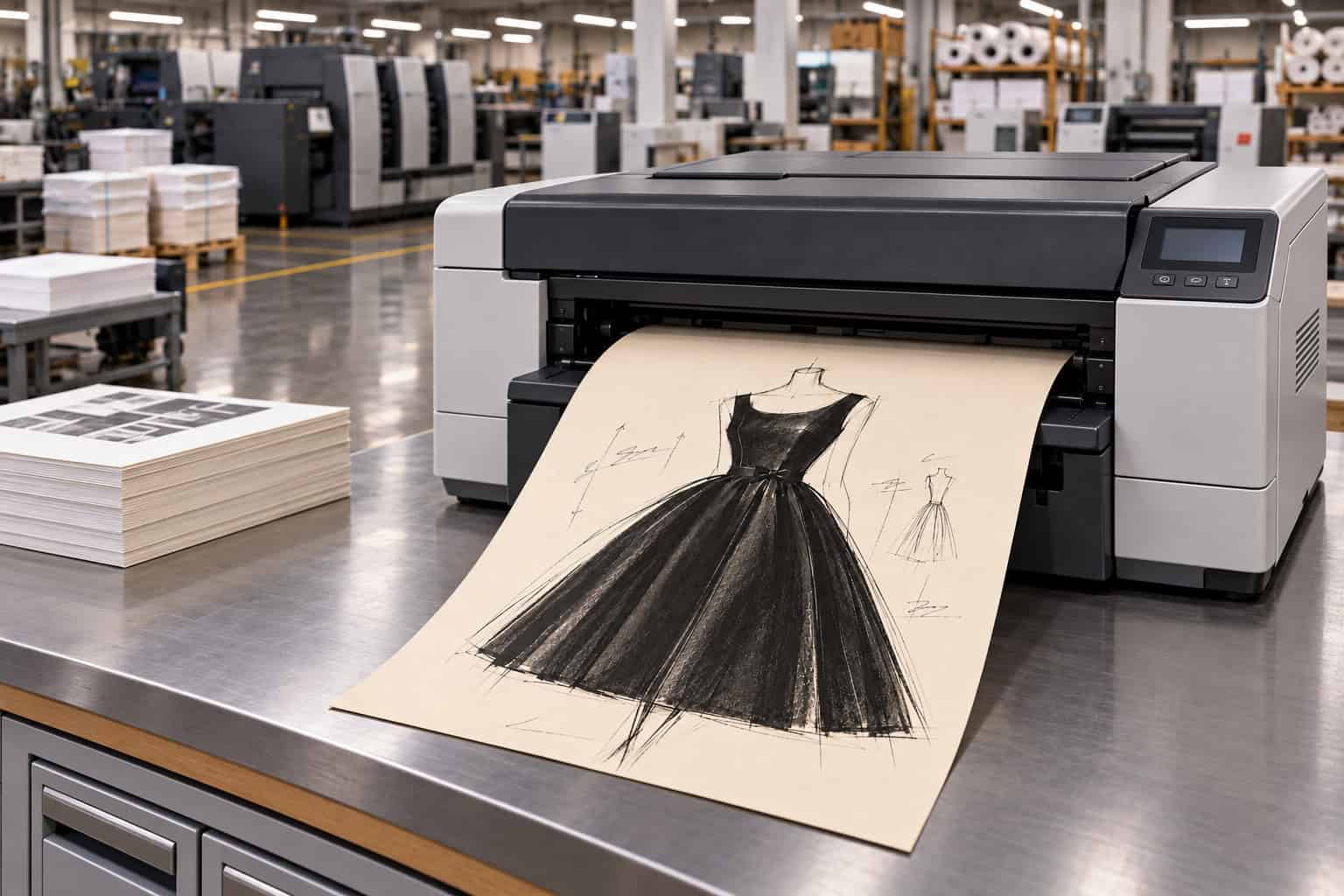
Print will never come back in a pre-digital sense, but it is coming back as a strategic tool, as a way to anchor marketing campaigns in something people can actually see, hold, and return to. So what does that look like in practice?
Consider healthcare: materials often live in the environment, not the inbox. Think about patient rooms, waiting areas. A well-designed brochure explaining a procedure or recovery expectations doesn’t just inform, it reassures. It’s something a patient or family member can pick up, reread, and physically hold onto in a stressful moment. The physicality of the piece conveys authority and stability.
Even direct mail—which has long been considered outdated—is seeing a resurgence, because marketers have found out it performs surprisingly well in an oversaturated digital world. This doesn’t necessarily mean mass, generic mailers, but highly intentional pieces: a beautifully printed catalog, a premium invitation, a dimensional mailer. In a digital world, the mailbox is suddenly less crowded than the inbox, which has totally changed the equation.
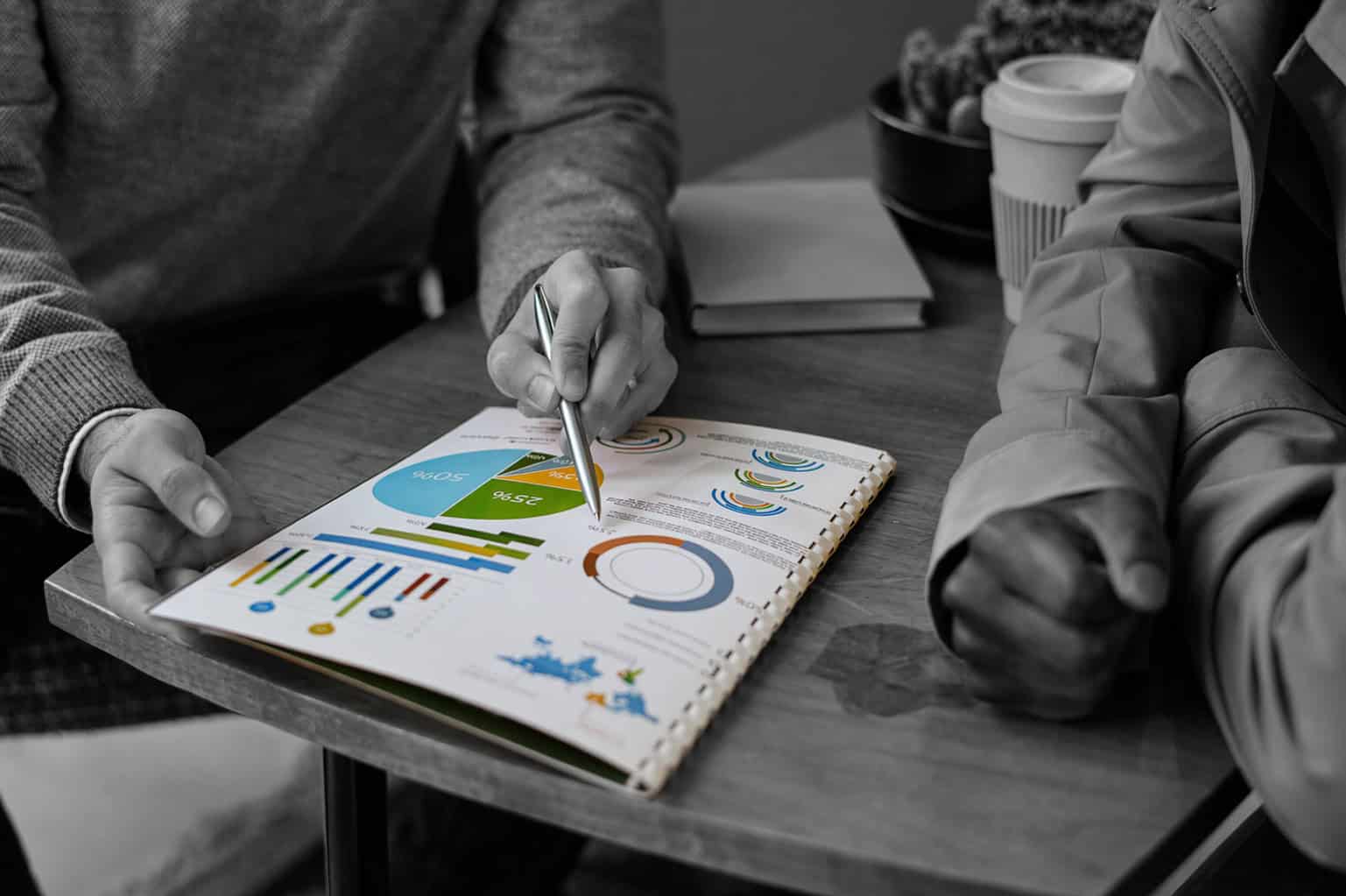
And, of course, the most effective approaches don’t stop at print. They connect it to digital. A printed guide drives to a QR code. A QR code links to a personalized experience. A physical piece becomes the entry point into a broader campaign that can be tracked and extended. The most effective campaigns aren’t choosing between print and digital. They’re combining them in a way that plays to the strengths of both.
From Content to Story
The same lessons can be applied to video. It’s not enough just to flood audiences with posts and reels and, as they say, content. We’ve all become blind to most video content because it’s always being forced on us relentlessly. It still has to connect in a meaningful way.
Research consistently shows that emotionally driven storytelling performs significantly better: ads with strong emotional content perform twice as well as those that strictly feed information. Consumers are much more likely to remember, and especially share, videos that pull at the emotions, or make them laugh. Despite all the innovations in video, it’s the human moment, the human touch, the human feelings that continues to make the biggest impact.
The Takeaway
The return to tactile, to human, to print, to real may look like a step backward, but it’s really more of a course correction.
For years, marketing has been pushing toward more speed, more scale, more efficiency. But along the way in pursuing more, it often lost something more important: meaning. And now, the advantage is shifting—not to those who produce the most, but to those who create something that’s tangible and alive and can’t be ignored.